

NewsDetails
Polyurethane Edge-Sealed Rock Wool Composite Panel | Anti-Condensation & Anti-Sinking
author:Tianxing time:2026-11-25 18:33:48 Click:64
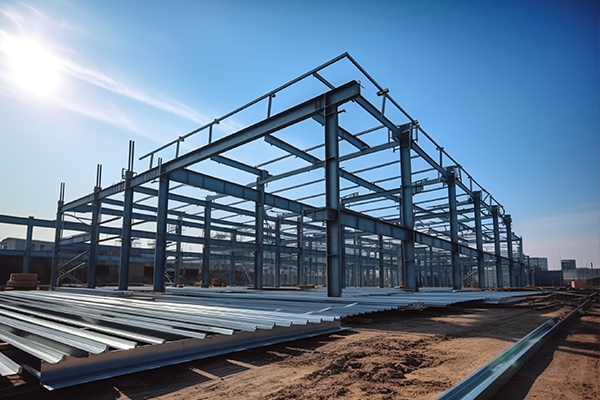
Many purification workshops, factory exterior walls and cold storage enclosure projects adopted rock wool sandwich panels at the beginning. The panels look similar in appearance and have favorable test reports. However, only 3 to 4 years after installation, problems occur: The inner side of the wall keeps wet with continuous moisture condensation; The rock wool core gradually softens and sinks downward, forming hollow gaps inside the panel; The thermal insulation performance fails, energy consumption rises sharply, and mold grows easily, which even threatens the safe operation of the factory.
Why is there such a big gap between different rock wool sandwich panels? Most customers first suspect that the rock wool itself is of poor quality. In fact, the core problem usually lies in the edge sealing structure and core fixing method.
1. Why ordinary rock wool sandwich panels tend to “fail”
Conventional pure rock wool sandwich panels are wrapped with steel sheets on both sides, with exposed rock wool or simple sealant at the side edges:
Water vapor invasion path: Rock wool is porous and hydrophilic. Without fully sealed edge, water vapor and indoor condensate can penetrate into the rock wool through panel seams and side edges. Once absorbing water, rock wool doubles in weight and its thermal conductivity rises rapidly, leading to damp walls and condensation.
No lateral locking restraint: Rock wool is loosely stacked between steel sheets, only clamped by upper and lower plates without rigid edges to hold the core. Over time, under its own weight and extra weight from moisture, rock wool slides and sinks, leaving hollow space at the top of the panel. The surface still looks intact, while the inner core has separated and suspended, and insulation is completely invalid.
Aging of sealant: Sealant will crack after 3-5 years. It is only a temporary remedy rather than a permanent structural solution.
In short, rock wool itself is a good insulation material, but panels with bare rock wool edges carry hidden risks of water ingress and structural collapse.
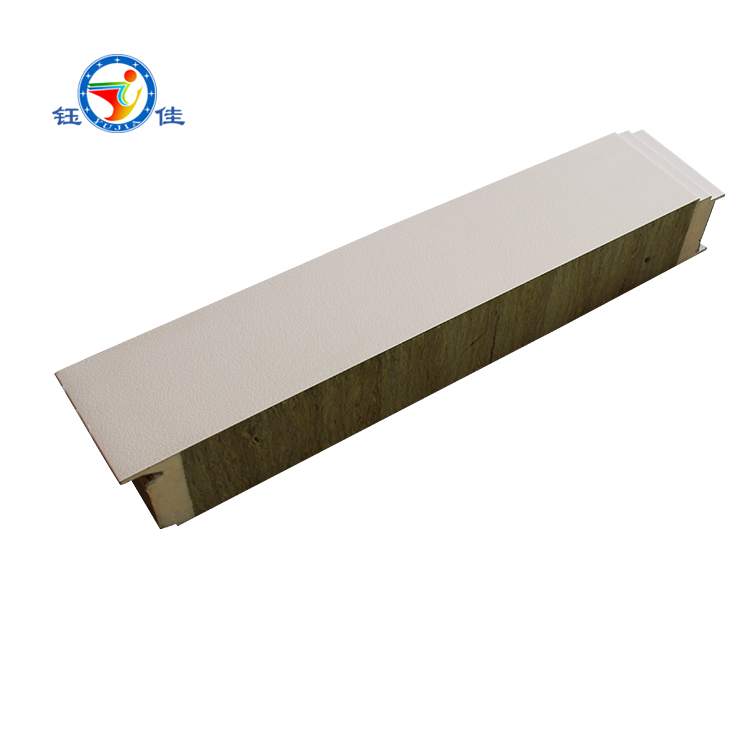
2. Polyurethane edge-sealed rock wool composite panel solves the root problem
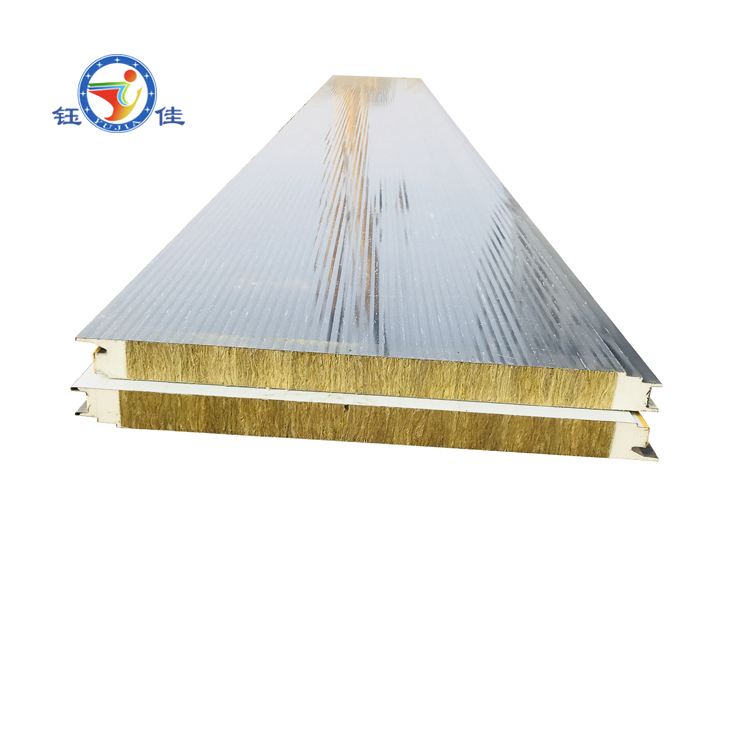
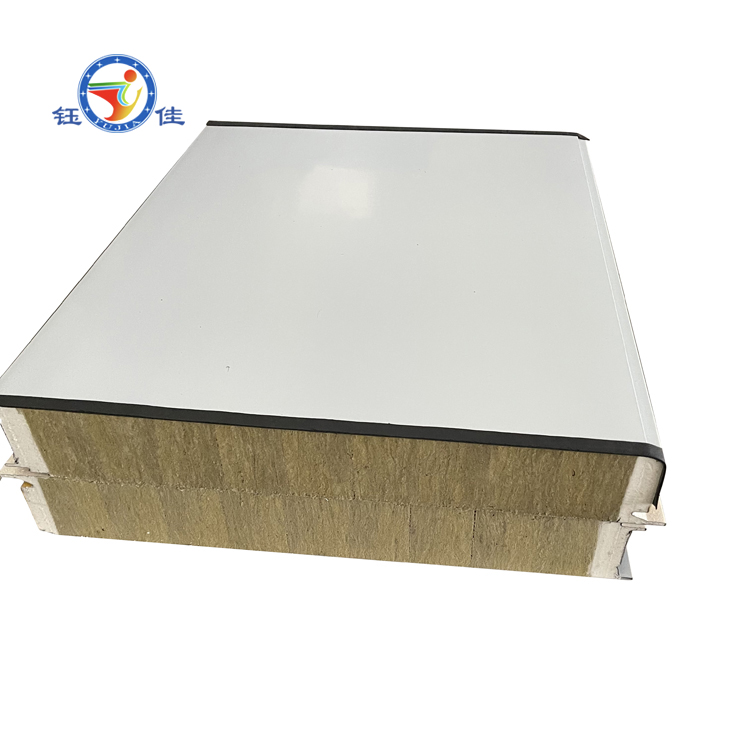
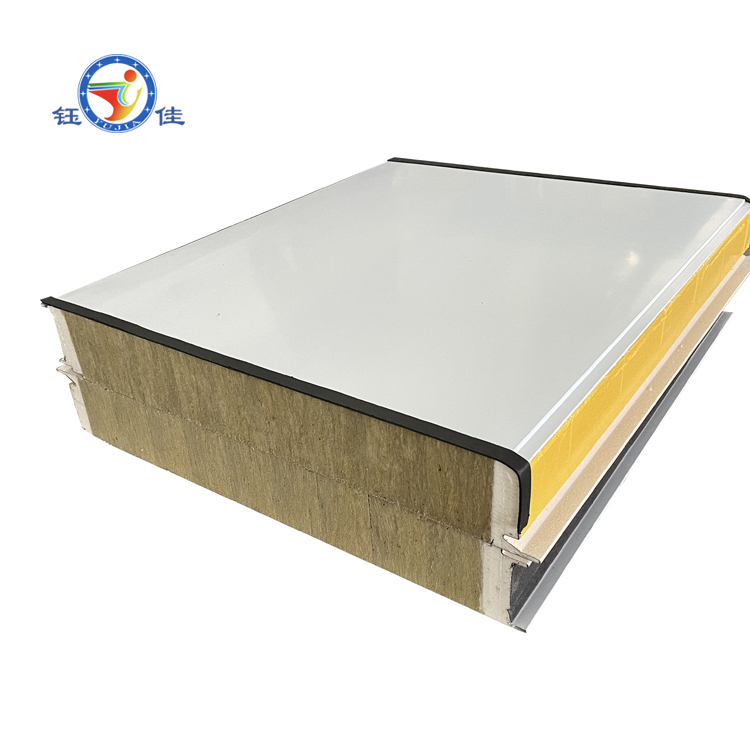
Xinjiang Yujia Environmental polyurethane edge-sealed rock wool composite panel adopts a composite structure with rigid polyurethane foam on both sides and high-density rock wool core in the middle. It is NOT simply rock wool panel with extra glue! ✅ Fully sealed edge to block water vapor The left and right sides are integrated rigid polyurethane edges with high closed-cell rate and water resistance. They completely enclose the rock wool core to block water vapor and condensate penetration and reduce condensation at the source. Together with matching sealing structure after panel assembly, it forms a continuous vapor barrier.
✅ Rigid locking to prevent rock wool sinking The rigid polyurethane edges are firmly bonded with rock wool and steel sheets, acting like two rigid frames to lock the core horizontally. The rock wool will not slide or sink due to its own weight or moisture, ensuring stable internal structure without hollow gaps for long-term use.
✅ Balanced safety and thermal insulation The middle rock wool delivers reliable fire safety performance to meet requirements for factories, purification workshops and warehouses. The polyurethane edges undertake sealing, anchoring and cold bridge blocking, reducing condensation risk at seams. It achieves fire safety, insulation and structural stability at the same time.
Key point: Not all rock wool sandwich panels share the same structure. Continuous polyurethane edge sealing is the critical dividing line.
3. Professional supporting solution from Xinjiang Yujia Environmental
High-quality panels also need proper supporting design to avoid later troubles:
Matching selection: Select rock wool density and panel thickness according to scenarios (purification workshop, exterior wall, cold storage, high-temperature workshop), instead of blindly choosing thin panels or low-density core for low price.
Complete accessories: Special trims, vapor barrier membranes, breathable cushions and weather-resistant sealing system. Standard details for seams, corners and door/window openings to eliminate weak condensation points.
Installation guidance: Provide technical disclosure to standardize hoisting, fixing and splicing, and prevent damage to edge sealing structure during installation.
After-sales technical support: Pre-review drawing details in advance to predict condensation and cold bridge risks, instead of emergency repair after failure.
Enclosure panels all look like steel sheet + rock wool. The price difference reflects the difference in structural design. Condensation, core sinking and insulation failure only appear after several years, and the repair cost is extremely high. Production shutdown loss and rework expense are far higher than the money saved by choosing cheaper panels at the beginning.
When choosing rock wool sandwich panels, do not only check test reports. It is more important to confirm long-term vapor barrier performance and anti-sinking structure.
Xinjiang Yujia Environmental focuses on enclosure panel solutions. Our polyurethane edge-sealed rock wool composite panels solve long-term pain points through structural optimization, and provide stable and reliable enclosure systems for factories and purification projects.
Contact your Xinjiang Yujia Environmental sales manager for samples, drawing details and technical consultation!
 Recommended Products
 Contact us
—— Contact:Ms. Zhang
—— Tel:(+86)18399688883
—— Email:18399688883@163.com
—— Url:https://www.tianxingmaterials.com
—— Address:Horgos City, Ili Kazakh Autonomous Prefecture, Xinjiang, China